Free Zone Corporate Tax Registration
Free zones, also known as free trade zones or special economic zones. Free zones are special areas where businesses can operate with fewer rules and lower taxes. This makes it attractive for companies to set up and grow. Many businesses operate in free zones to take advantage of these benefits. However, the government now requires these businesses to register for Free Zone Corporate Tax Registration. This means they must follow tax rules and pay taxes on their profits. Registering for corporate tax can be complicated, so businesses need help to do it correctly.
Here, we will discuss the eligibility criteria, process of registration in Free Zone Corporate tax in Dubai, and key considerations along with compliance requirements. Whether you are an entrepreneur, business owner, or financial professional, staying updated about the intricacies of Free Zone corporate tax registration is highly important in terms of retaining your competitiveness and ensuring that your business remains valid in the long run.
Registration is required where an entity meets the registration criteria. However, a Qualifying Free Zone Person may benefit from 0% on qualifying income if it meets the FTA conditions — non-qualifying income remains taxable.
Free Zone Corporate Tax
Free Zone Corporate Tax is a policy for corporate tax applied to businesses in certain free zones of the country, mainly in the UAE. A free zone is a specialized economic area that offers specific advantages, primarily designed to attract more foreign investments and stimulate economic growth. Usually, companies operating in free zones have special tax benefits.
- Tax exemptions: Free zones offer the corporate tax wholly or partly for a term of 50 years or more, depending on the zone and the nature of the business.
- Duty on customs: importations within the free zones are usually free from paying the tariffs since they exempt them from the customs tax. Therefore, running the manufacturing, trade, and logistics business within the free zones is relatively cheaper.
- Repatriation of Profits: The companies operating in free zones can repatriate 100% of their profit and capital without any constraints.
- Zero VAT on Exports: Goods and services exported from free zones may be qualified for zero-rated VAT, which would increase cost savings for export-driven businesses.
Many free zones get exemptions for a very large amount of corporate tax relief, but the latest amendment in corporate tax regulation in the UAE would still put some sort of restriction on companies or force them to follow reporting requirements. Companies working in free zones must stay updated with the knowledge of tax laws applicable to their business since income received outside the free zone or within the mainland UAE would be charged with the usual corporate taxes.
Free Zone Corporate Tax Registration
What is Free Zone Corporate Tax Registration?
Corporate Tax Registration for Free Zone entities refers to the process of registering a free zone company with the UAE's Federal Tax Authority (FTA) for corporate tax purposes. The purpose of this registration is to ensure that free zone companies comply with the UAE's corporate tax laws and regulations. And ensure that free zone entities with a taxable income exceeding AED 375,000 report their income and pay corporate tax accordingly. This registration enables the FTA to monitor and collect corporate tax from eligible free zone entities, promoting transparency and compliance with UAE tax regulations.
UAE's Corporate Tax Laws and their Applicability to Free Zone Companies
The UAE introduced Corporate Tax in 2023, which applies to all businesses, including free zone companies. The corporate tax rate in the UAE is 9% for taxable income exceeding AED 375,000. Free zone companies are required to register for corporate tax if their annual taxable income exceeds AED 100,000.
Corporate tax Registration for Free Zone businesses refers to the official registration procedure with the tax authority. Upon registration, companies in Free Zones can fulfill their obligations on corporate tax registration and can avoid both sales tax and import duties among other benefits; this provides foreign direct investment into the UAE.
Corporate tax registration is essential because it ensures that businesses are in compliance with legal requirements, report their incomes accurately, and pay all taxes due thereby avoiding penalties. Access to tax benefits and incentives is also obtained. It will help build financial credibility required for growth and attract investors.
Free Zones play a very significant role in the economy of the UAE through means such as creating diversification and jobs and providing the UAE with a hub globally for business. A considerable attraction of foreign investments flows towards areas, such as technology, logistics, and finance sectors that influence trade and fuel the GDP of the nation.
Corporate tax registration provides Free Zone businesses with alignment to the country's changing tax system as they keep in adherence to the country's law. This also avails transparency, accountability, and fair competition by integrating the Free Zone businesses into the larger economic framework as contributing to sustainable growth in the UAE
Free Zone Corporate Tax Registration Deadlines / Timeline
All Free Zone Persons meeting the registration criteria must register with the Federal Tax Authority (FTA) to obtain a Tax Registration Number (TRN).
Registration timeframes differ by taxpayer type per the FTA Decision effective 1 March 2024 — some categories must register within prescribed shorter periods. See FTA Decision on registration timeframes. Entities should ensure registration is completed on time to avoid penalties or late registration issues.
All Free Zone Persons are required to file their Corporate Tax Returns within nine months from the end of their financial year.
Example — an entity with financial year 1 Jan–31 Dec 2024 must file its return by 30 September 2025 (nine months from year-end). Timely filing ensures compliance and avoids penalties or late fees imposed by the FTA.
General Corporate Tax Rules for Free Zone Persons
- Corporate Tax Rate: Free Zone Persons (FZPs) are subject to a corporate tax rate of 9% on taxable income.
- Taxable Income: Taxable income includes profits from business activities, dividends, interest, and royalties.
- Tax Registration: FZPs must register for corporate tax with the Federal Tax Authority (FTA).
- Tax Returns: FZPs must file tax returns with the FTA within the specified timeframe.
Qualifying Free Zone Person (QFZP) Criteria
To be considered a Qualifying Free Zone Person (QFZP) and benefit from the 0% corporate tax rate, a Free Zone Person must meet the following requirements:
- Incorporated in a Free Zone: The person must be incorporated or established in a Free Zone in the UAE.
- Maintain a Physical Presence: The person must maintain a physical presence in the Free Zone, such as an office or warehouse.
- Conduct Relevant Activities: The person must conduct relevant activities, such as trading, manufacturing, or providing services, within the Free Zone.
- Comply with Regulations: The person must comply with all relevant regulations and laws of the UAE and the Free Zone.
- Not a Branch of a Non-Resident Person: The person must not be a branch of a non-resident person that is not registered in the UAE.
- Meet the Minimum Requirements: The person must meet the minimum requirements for a QFZP, as specified by the UAE Ministry of Finance.
Understanding the Main Free Zones for Corporate Tax Registration in UAE
Who Needs to Register for Free Zone Corporate Tax?
The UAE Free Zones businesses need to apply for corporate tax based on the minimum requirements set by the UAE tax authority. These would be considered, such as:
All trading or manufacturing-based businesses: All enterprises incorporated within a Free Zone and incurring revenue will have to register with corporate tax even though they are eligible for tax exemptions or reduced tax rates.
- Companies Having Income Outside the Free Zone: A Free Zone company may be liable to register itself if it has income from activities carried out outside of the Free Zone, even in the mainland of the UAE or abroad.
- Companies having Business Expansion Plans: Free Zone businesses looking to expand in the future either by undertaking cross-border transactions or through interests in mainland UAE businesses may look forward to registering for corporate tax and abide by the overall taxation regulations of the UAE.
- Businesses Conducting Non-Exempt Activities: Some free zone companies may not be exempt from tax on certain activities, such as trading with the mainland UAE. In this case, they would be required to register and pay taxes with applicable rates.
- Companies To Be Tied to New Tax Laws: Newly introduced UAE tax reforms have brought compulsory registration for corporate taxes for some Free Zone companies, which were previously exempt from corporate taxes in case they exceeded the threshold defined under new tax laws in the UAE.
All businesses within Free Zones that carry out taxable activities, receive income from sources outside the UAE, or are in any way touched by the new tax law have to register for corporate tax to exist compliantly within the UAE's tax structure.
Benefits of Free Zone Corporate Tax Registration
Free zone corporate tax registration offers many advantages to the businesses operating in the free zones. Some of the most notable advantages include:
- 0% Corporate Tax Rate: QFZPs enjoy a 0% corporate tax rate on qualifying income, which results in significant reductions of tax liabilities compared to mainland businesses, which merely have a standard 9% tax on taxable income of more than AED 375,000.
- Profit repatriation: Free zone companies may freely and unrestrictedly take back their profits and capital from the UAE, hence adding greater flexibility to financial dealings.
- Duty Exemptions: Many free zones offer waivers on import and export duties, further lowering operational costs for businesses.
Eligibility Criteria for Free Zone Corporate Tax Registration
To qualify to start a business in any UAE Free Zone, there are defined qualification requirements. The following are the key considerations regarding the types of businesses that can be registered, the requirements of registration, and the documents required.
Free Zone businesses in the UAE are generally subject to Corporate Tax but may benefit from special tax treatment if they meet specific criteria. Qualifying Free Zone Persons (QFZPs) are eligible for a 0% Corporate Tax rate on qualifying income, provided they satisfy the FTA’s substance, activity, and compliance conditions.
Some Free Zone Persons may qualify for a 0% rate on qualifying income subject to meeting the FTA’s Qualifying Free Zone Person conditions — eligibility depends on activities, substance and other criteria set out in the FTA guide.
However, any non-qualifying income earned by such entities will be taxed at the standard 9% rate.
Free Zone entities meeting the registration criteria must register for Corporate Tax with the FTA and obtain a Tax Registration Number (TRN). Natural persons with business turnover exceeding AED 1,000,000 in the Gregorian year must register for Corporate Tax; the FTA reminded natural persons to register before 31 March 2025 where applicable. Entities and individuals should ensure timely registration to avoid penalties or compliance issues.
Nature of Businesses Qualifying to be Registered at Free Zones
- General Trading Companies: The companies, which mainly trade with various goods imported and exported.
- Service Providers: Consultancy-based businesses, IT, and legal service firms.
- Manufacturers: companies involved in the manufacturing and assembly of products.
- E-commerce Ventures: E-commerce companies that operate under the free zone regulations.
- Technology Firms: companies involved in the development and innovation of technology.
- Media and Creative Industries: Media production business, advertising, and creation of content. There is a different specification of each Free Zone along certain industries; therefore you are expected to look out for one whose business activities you are involved in.
Documents Required for Free Zone Corporate Tax Registration
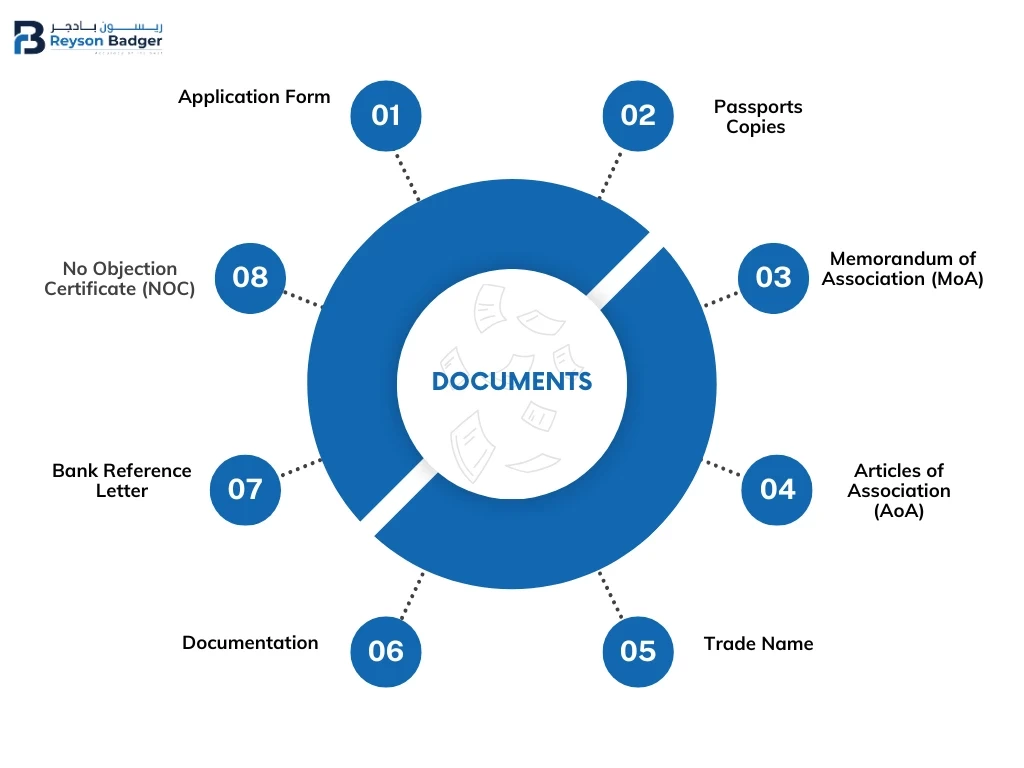
To successfully register a business in a Free Zone, the following documents are usually required:
- Application Form: Complete application form by the Free Zone authority
- Copies of Passports: Of Shareholders and managers or directors to be engaged in the business.
- Memorandum of Association (MOA): This is the constitution of the company that defines its structure and the aims of the company.
- Articles of Association (AOA): Articles of association define the internal rules and regulations of the conducting of the company's business.
- Trade Name: A unique trade name should be selected that must be in Free Zone acceptable naming conventions and it has to be registered.
- Documentation: Proof of Address, Utility bills or lease agreements for proposed business premises in the Free Zone
- Bank Reference Letter: a letter confirmed from a bank regarding account standing, in relation to matters of financial credibility.
- Non-Objection Certificate (NOC): This, if applicable, would need to be issued by any existing sponsor, only if the applicant is already a resident in the UAE.
Step-by-Step Registration Process for Free Zone Corporate Tax Registration
Registration to establish a company in any of the UAE Free Zones is an extremely formalized process. Below are the steps involved in the process from pre-registration procedures to post-registration activities.
- Log in to the EmaraTax Portal: Use your login credentials, which may include UAE Pass, to log in to the EmaraTax portal. If you have not yet created an account, create it, or reset your password if you have forgotten it.
- Add Taxable Person: Confirm that a taxable person is associated with your account. If not, create a new taxable person by filling in the necessary information.
- Open Corporate Tax Dashboard: Select a taxable person and the Corporate Tax Dashboard will open.
- Start Enrollment: Click "Register" at the tile of Corporate Tax and read the instructions to check the box for continuing,
- Fill Entity Section: Fill in all the details of the Entity based on the type of business and click "Next"
- Fill Identification Section: Provide the trade license along with the business activity, and click "Next".
- Complete Contact-Details: Fill in the registered business address and continue by clicking "Next".
- Authorized Signatory Section: Attach the authorized signatories and any other necessary attachments, say power of attorney if needed.
- Verify and Declare: Verify all the information click on the declaration checkbox and submit it.
- Corporate Tax Registration Number: All the references will be generated automatically upon submission. FTA will communicate with respect to approval, rejection, or requiring more information.
How Calculating Corporate Tax for Free Zone Persons?
In the UAE, Free Zone Persons (FZPs) must calculate corporate tax based on their qualifying and non-qualifying income.
Qualifying Free Zone Persons (QFZPs) may benefit from a 0% corporate tax rate on qualifying income if they meet the FTA’s conditions regarding activities and substance. Income sourced outside qualifying free-zone activities (non-qualifying income) will generally be subject to the standard corporate tax rules; refer to the FTA Guide on Qualifying Free Zone Persons for details on qualifying and excluded activities. Non-qualifying income is taxed at the standard 9% corporate tax rate, and entities should maintain proper records to differentiate qualifying and non-qualifying income.
Qualifying Income vs. Non-Qualifying Income
In the context of corporate tax for Free Zone Persons (FZPs) in the UAE, it is essential to distinguish between qualifying income and non-qualifying income:
- Qualifying Income: This refers to income generated by Qualifying Free Zone Persons (QFZPs) from activities that meet specific criteria set forth by the UAE tax authorities. Examples of qualifying income include:
- High-sea sales (transactions involving goods sold while still in transit).
- Exports outside the UAE.
- Transactions exclusively between Free Zone entities.
- Sales of goods that do not enter the mainland UAE.
- QFZPs can benefit from a 0% corporate tax rate on this type of income, provided they maintain adequate substance and comply with relevant regulations.
- Non-Qualifying Income: This encompasses any income that does not meet the qualifying criteria, including revenue from activities conducted within the mainland UAE or certain investment income. Non-qualifying income is subject to a 9% corporate tax rate on taxable income exceeding AED 375,000
Qualifying Free Zone Persons (QFZPs) are eligible for a 0% Corporate Tax rate on qualifying income, provided they meet the substance and compliance requirements set by the FTA. Non-qualifying income, however, is subject to the standard 9% Corporate Tax rate. Free zone entities with taxable income above AED 375,000 are subject to corporate tax at normal rates; different reliefs and elections may apply as described by the FTA.
Tax Rates Applicable
The tax rates applicable to Free Zone Persons are structured as follows:
- 0% Corporate Tax Rate: For qualifying income derived from eligible activities as defined under the UAE Corporate Tax Law and subsequent Cabinet and Ministerial decisions. This rate is designed to encourage businesses to operate within Free Zones and contribute to economic growth .
- 9% Corporate Tax Rate: For taxable income that does not qualify under the aforementioned criteria. This rate applies to non-qualifying Free Zone Persons (NQFZPs) or any taxable income exceeding AED 375,000 that does not meet the qualifying conditions
Calculating Corporate Tax
Step 1: Determine Taxable Income
- Identify income from qualifying and non-qualifying activities.
- Calculate taxable income from each source.
Step 2: Apply Corporate Tax Rates
- 0% corporate tax rate applies to qualifying income.
- 9% corporate tax rate applies to non-qualifying income.
Step 3: Calculate Tax Liability
- Multiply taxable income from each source by the applicable corporate tax rate.
- Add up tax liabilities from each source.
Step 4: Claim Tax Reliefs (if applicable)
- Claim tax reliefs, such as losses or exemptions, if eligible.
- Subtract tax reliefs from total tax liability.
Step 5: Pay Corporate Tax
- Pay the calculated corporate tax liability to the Federal Tax Authority (FTA).
Penalty for Non-Compliance for Free Zone Corporate Tax Registration
As per Cabinet Decision No. 10 of 2024, from 1st of March, 2024 the Ministry of Finance, in case of failure to comply with Corporate Tax Registration levies a penalty of AED 10,000.
Late-registration penalty waiver
Failure to register for Corporate Tax on time may result in an administrative penalty of AED 10,000, as imposed by the FTA.
FTA Waiver: The AED 10,000 late-registration penalty may be waived/refunded where the first Corporate Tax Return (or annual declaration for exempt persons) is submitted within 7 months from the end of the first Tax Period. Businesses should review the FTA waiver eligibility criteria to ensure they qualify for relief and avoid unnecessary penalties.
Relatively favorable business policies in the UAE’s Free Zones offer several advantages, including strategic locations, modern infrastructure, and tax benefits. Free Zones like Dubai Free Zone and JAFZA are particularly attractive to trade, logistics, and technology-based businesses. However, it’s important to note that local laws still apply, and staying compliant requires professional guidance.
To fully benefit from Free Zone incentives, businesses need expert advice to keep up with changing regulations. Reyson Badger, with its deep understanding of Free Zone regulations and corporate tax laws, can help businesses navigate VAT, customs duties, and other legal requirements. This ensures compliance while improving operational efficiency.
If your business is considering registering for Free Zone corporate taxation, now is the perfect time. Contact Reyson Badger for professional consultation and expert assistance in navigating the regulatory environment and maximizing your Free Zone benefits.
FAQs
1. Who needs to register for Corporate Tax in UAE Free Zones?
Answer: All Free Zone companies that have a taxable income exceeding AED 100,000 must register for Corporate Tax in the UAE. This includes companies that are currently exempt from corporate tax.
2. Is Corporate Tax applicable to all Free Zone companies?
Answer: No, Corporate Tax is not applicable to all Free Zone companies. Companies that have a taxable income below AED 100,000 are not required to register for Corporate Tax. Also, some Free Zone companies may be exempt from Corporate Tax, such as those engaged in specific industries or meeting certain conditions.
3. What are the benefits of registering for Corporate Tax in a UAE Free Zone?
Answer: Registering for Corporate Tax in a UAE Free Zone provides several benefits, including compliance with UAE laws and regulations, avoidance of penalties and fines, access to government services and benefits, and enhanced credibility and reputation.
4. Can a Free Zone company with no business operations still be required to register?
Answer: Yes, a Free Zone company with no business operations may still be required to register for Corporate Tax if it has a taxable income exceeding AED 100,000. This includes companies that have income from investments or other sources.
5. What happens if I fail to register for Corporate Tax in a Free Zone?
Answer: Failure to register for Corporate Tax in a Free Zone can result in penalties and fines, as well as potential legal action. Additionally, companies that fail to register may be denied access to government services and benefits.
6. Can Free Zone companies still enjoy the 0% Corporate Tax incentive?
Answer: Yes, Free Zone companies that meet certain conditions may still be eligible for the 0% Corporate Tax incentive. However, companies must register for Corporate Tax and meet the eligibility criteria to qualify for the incentive.